Heating protection
Oil heat, propane heat, boilers, furnaces, thermostats, filters, venting, and no-heat warning signs are checked with the property type in mind.
Seasonal homes around Fulton County, Montgomery County, Caroga Lake, Northville, Mayfield, Broadalbin, and the Sacandaga region need a practical plan for heat, water, sump pumps, fuel, freeze risk, and equipment that may sit unused for part of the year.
The HVAC Whisperer helps homeowners find the real risk before a small system issue becomes a no-heat call, a burst pipe, a wet basement, or a failed water heater.
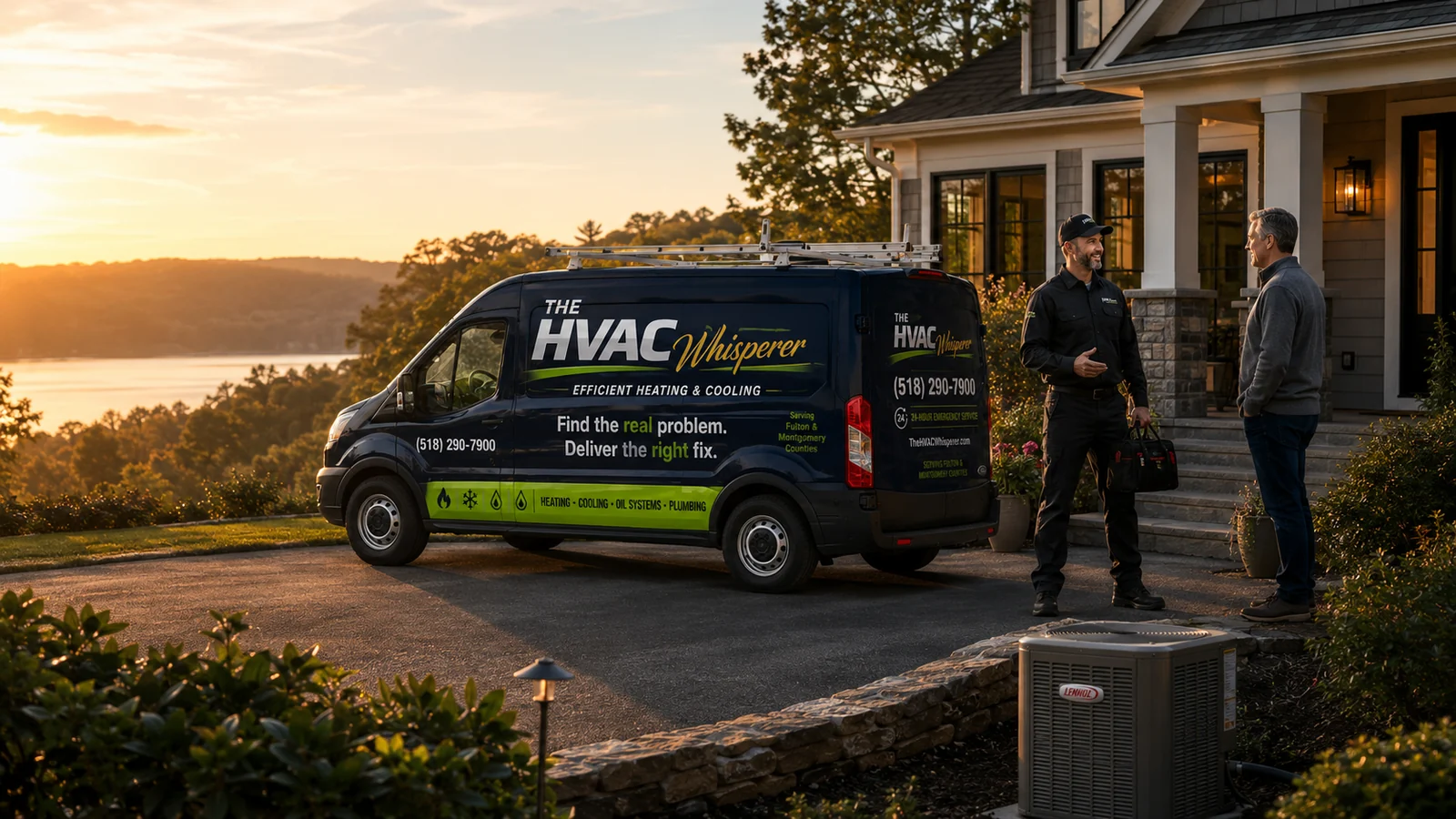
When a property is empty for weeks or months, small issues can hide. The right service visit looks at the system, the home, the fuel source, and what could fail while nobody is there.
Oil heat, propane heat, boilers, furnaces, thermostats, filters, venting, and no-heat warning signs are checked with the property type in mind.
Plumbing shutoffs, exposed lines, water heaters, pressure issues, and vulnerable areas are reviewed before cold weather or before reopening.
Sump pumps, discharge concerns, spring thaw risk, and wet-basement warning signs matter in lake-area and rural properties.
Before closing, the focus is protection: heat reliability, plumbing risk, fuel, water heaters, sump pumps, and anything that could fail while the property is empty. Before opening, the focus is safe restart: water, heat, hot water, airflow, moisture, and equipment that needs attention before regular use.
This is especially important for rural roads, lake homes, older camps, and properties that depend on oil or propane instead of natural gas.
Every recommendation should make the service clearer, protect the home, and reinforce the standard behind The HVAC Whisperer: Built on Integrity, Driven by Excellence.
Owners of camps, lake homes, seasonal homes, rural properties, and part-time residences that may sit empty during cold, humid, or wet weather.
Heating condition, thermostats, fuel supply, plumbing shutoffs, exposed lines, water heaters, sump pumps, drains, basements, and freeze-risk areas should be reviewed.
Schedule before closing, before reopening, before winter vacancy, before spring thaw, or after any sign of no heat, moisture, leaks, odor, or water damage.
Fulton and Montgomery County homes include older city houses, rural properties, lake-area homes, basements, mixed fuels, and seasonal use patterns that change the service decision.
Small failures in an occupied home are easier to notice. In a seasonal property, the same failure can turn into freeze damage, a wet basement, or a no-heat emergency.
The next step is chosen from the evidence: symptom, age, condition, safety, access, repair history, budget, and what protects the home best.
Call or request service for seasonal heating, plumbing, water heater, sump pump, oil heat, propane heat, and freeze-risk concerns.
Seasonal-home service has to think ahead because the house may sit quiet through freezing nights, humid basements, heavy rain, spring thaw, fuel changes, and long gaps between visits.
The focus is heat reliability, safe shutdowns, plumbing exposure, water-heater condition, sump pump readiness, thermostat settings, and fuel planning.
The focus is safe startup, leaks, odor, water pressure, hot water, heat, cooling, moisture, and equipment that may have sat idle too long.
Low heat, power interruptions, fuel supply, failed thermostats, frozen piping, and unattended mechanical rooms can create expensive damage quickly.
Sump pumps, discharge lines, wet basements, drains, and water around equipment become more important as snowmelt and rain hit the property.
Caroga Lake, Northville, Mayfield, Broadalbin, and Sacandaga-area homes often need a different rhythm than in-town year-round homes.
The best plan connects maintenance, emergency access, system records, and follow-up items so the property is not starting from zero every season.
A year-round home usually gives warning signs because people are there to notice them. A seasonal home can hide the same problem until damage has already spread. A weak sump pump, leaking water heater, low heat setting, failed thermostat, oil burner issue, propane heating problem, or exposed line can become expensive because nobody saw the first symptom.
That is why the service approach is different for camps, lake homes, rural properties, and part-time residences. Opening and closing should not be treated like a quick checklist. The home, the equipment, the fuel source, the basement, the plumbing, and the weather exposure all matter.
The HVAC Whisperer should be the name owners think of when they want the property protected before winter vacancy, spring thaw, heavy rain, summer humidity, or seasonal startup. The value is prevention, records, local knowledge, and a clear plan when the home is not occupied every day.
That line has to be more than a slogan. It has to show up in how problems are diagnosed, how options are explained, and how the customer is treated after the work is done.