Diagnosis before decisions
The priority is to find the real cause before recommending parts, replacement, or a maintenance plan. Symptoms, safety, fuel source, equipment age, airflow, water, controls, and home layout all matter.
When the AC quits during hot weather, the next step should be clear. The HVAC Whisperer helps with no-cooling calls, hot rooms, weak airflow, frozen coils, and cooling failures across Fulton and Montgomery Counties.
We find the cause before recommending the repair, then explain the option before work is approved.
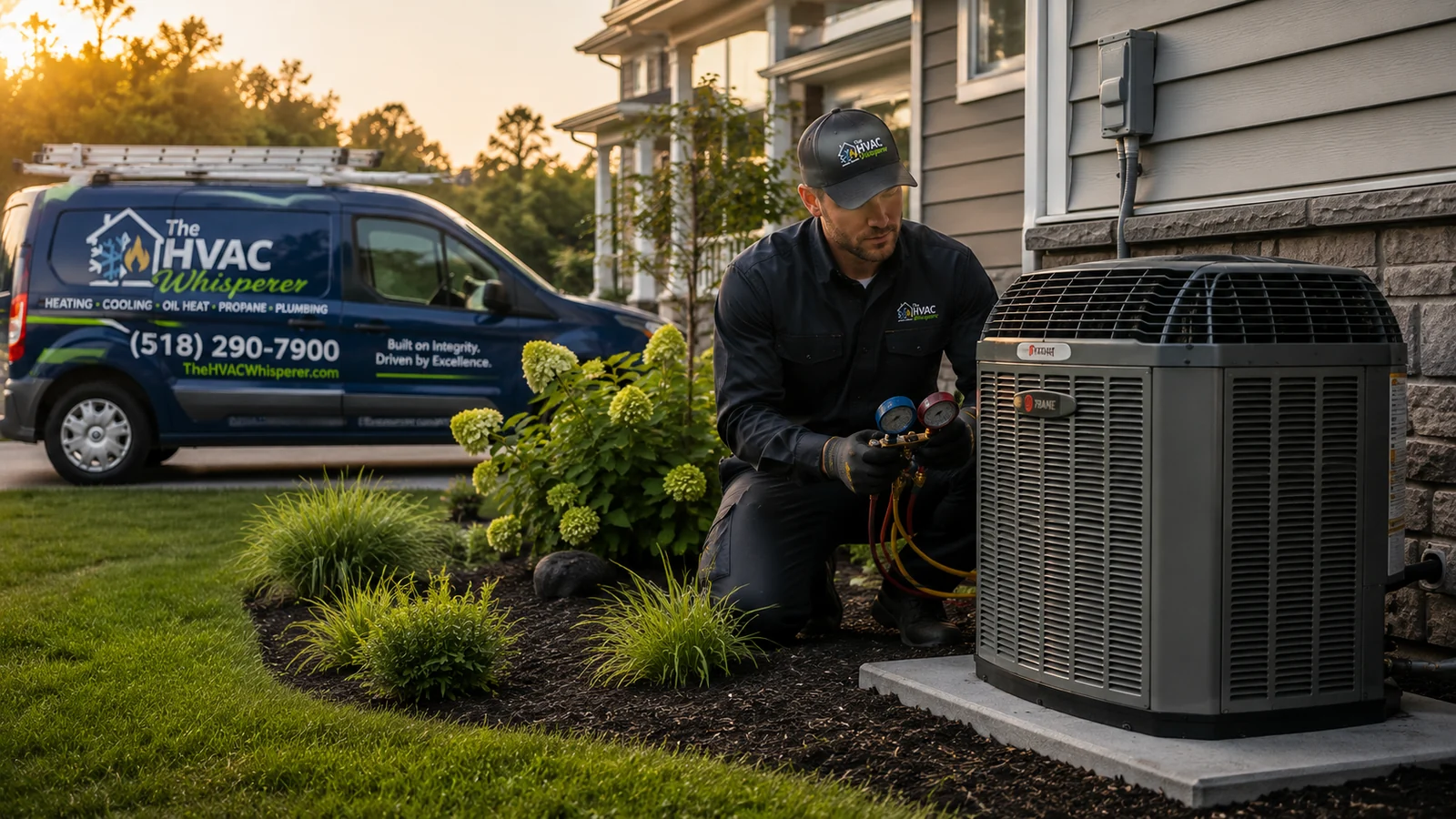
Call for emergency AC help when the system will not cool, the home is getting too hot, the outdoor unit will not run, a breaker trips, the coil freezes, or the system keeps shutting down.
We serve Gloversville, Johnstown, Amsterdam, Broadalbin, Mayfield, Northville, Caroga Lake, Fulton County, Montgomery County, and nearby communities.
A strong service page should make the next step obvious: what the issue may be, which service fits, and when it is time to call.
Warm air, weak airflow, frozen coils, short cycling, electrical problems, and cooling diagnostics.
Sizing, comfort goals, ductwork, equipment choice, and installation planning.
Coils, drains, airflow, refrigerant behavior, controls, and seasonal readiness.
Room-by-room cooling, lake homes, additions, garages, and hard-to-duct spaces.
Control issues, scheduling, wiring, and comfort settings checked against the equipment.
Urgent cooling issues when the home is unsafe, vulnerable, or heat-sensitive.
Call The HVAC Whisperer for 24-hour emergency AC service.
No-cooling calls needs to explain airflow, electrical symptoms, frozen coils, outdoor unit issues, and when the system needs to be shut down instead of forced to keep running.
The priority is to find the real cause before recommending parts, replacement, or a maintenance plan. Symptoms, safety, fuel source, equipment age, airflow, water, controls, and home layout all matter.
Fulton and Montgomery County homes use a real mix of gas, oil, propane, boilers, furnaces, AC, water heaters, sump pumps, and plumbing systems. In-town, rural, and lake-area homes do not all fail the same way.
The homeowner gets a clear next step without pressure: what was found, what can be repaired, what should be watched, and when a larger conversation makes sense.
Airflow, refrigerant behavior, controls, filtration, and room-by-room comfort should guide the recommendation.
The homeowner should know what is solved now, what to watch, and what should be planned before peak cooling weather.
Gas, oil, propane, boilers, furnaces, AC, water heaters, sump pumps, and plumbing repairs all show up differently across the service area.
Homeowners can call, request service, or keep reading when another guide gives them a better next step.
Better service records and maintenance history help future visits start with context, not guessing.
The page should help a homeowner understand when an AC issue is urgent, what warning signs matter, and why the repair path should be based on the actual cooling failure.
Homeowners dealing with no cooling, hot rooms, frozen coils, weak airflow, water near the air handler, electrical issues, or AC that will not restart.
Thermostat calls, electrical controls, outdoor unit operation, indoor airflow, coil condition, condensate drainage, and symptoms that point beyond one failed part.
Call when the home will not cool, vulnerable occupants are affected, ice forms, water appears, breakers trip, or the system keeps shutting down.
Older homes, rural properties, lake homes, finished basements, and tight mechanical rooms can all change the cooling diagnosis.
Resetting, thawing, or changing parts without finding the cause can let the same cooling failure return during the next heat wave.
The goal is to get the issue moving, explain what the system is proving, and separate emergency repair from future maintenance or replacement planning.
A no-cooling call often feels simple from the thermostat, but the actual cause can be outside, inside, electrical, airflow-related, drainage-related, or connected to system age. A frozen coil, tripped breaker, short cycle, weak airflow, or water near the air handler should not be treated like a one-part assumption.
The homeowner needs a fast path, but they also need the repair explained. Emergency AC service should move the call forward, protect the home, and make clear whether the system needs a repair, maintenance, or a replacement discussion after the immediate problem is understood.
That line has to be more than a slogan. It has to show up in how problems are diagnosed, how options are explained, and how the customer is treated after the work is done.